Front Door Replacement in Chicago's North Suburbs: A Complete Homeowner's Guide
-
10min
-
Published:10/29/2026
-
ByShaunak Ahuja
Most people don't start researching front door replacement because they want a new door. They start because the old one has been bothering them for years, and something finally tipped it: a draft at the ankles in October, a deadbolt that only turns if you lean on the door, a sill that feels soft underfoot.
This guide covers the key decisions you’ll need to make, from identifying which of the three project types fits your needs to comparing how fiberglass, steel, and wood hold up in Chicago winters. You’ll also learn what to look for on energy labels and locks, when permits are required, and how long the work typically takes.
HX Home Solutions is a family-owned remodeling company that has served homeowners since 1950. We replace entry doors across Lake, Cook, and DuPage counties.
Signs It's Time to Replace Your Front Door
Some door problems are simple adjustments: a loose hinge screw, a worn strike plate, tired weatherstripping. Replacement makes sense when the door or the frame itself is failing. Watch for these signs:
- You can feel air or see daylight around the edges, even after new weatherstripping.
- The door sticks in summer and rattles in winter, which means the slab or frame expands and contracts with moisture.
- A steel door has dents, peeling paint, or rust along the bottom edge.
- The lock no longer lines up with the strike unless you push or lift the door.
- The jamb or sill looks dark, soft, or swollen near the floor.
There are two quick checks you can do today. On a cold, windy morning, run your hand slowly around the door's perimeter and note where you feel air. Then press a thumbnail into the bottom of the jamb. If it sinks in, moisture damage may be present, potentially affecting the scope of the project.
Slab, Pre-Hung, or New Opening: Three Different Projects
"Front door replacement" can mean three very different jobs. Knowing which one you have explains most of what follows: the timeline, the disruption, and whether a permit is likely.
A slab-only swap sounds simplest, but it rarely fixes drafts, because most leaks come from the frame and sill. For most older homes, a pre-hung unit is the more reliable fix.
What We Find Behind the Trim
Removing the old trim reveals the true condition of the opening. These are the most common findings in older suburban homes:
- Rotted sill or subfloor from years of water getting past a failed sill seal.
- Water-damaged jamb at the bottom corners, often hidden under layers of paint.
- Out-of-square opening from decades of settling, which explains a door that never closed right.
- Empty gaps between the frame and the studs with no insulation, a major source of drafts.
- A shortcut installation from a previous owner, such as an undersized door shimmed into a large opening or no flashing under the sill.
None of these stop a project. These issues need to be identified and repaired before installing the new door to prevent the same problems from happening again. A careful installer checks for them during the estimate, not halfway through install day.
Fiberglass vs. Steel vs. Wood Entry Doors
All three materials can make a good front door. The right choice depends on your house, how exposed the entry is to wind and snow, and how much upkeep you want to take on.
Fiberglass Entry Doors
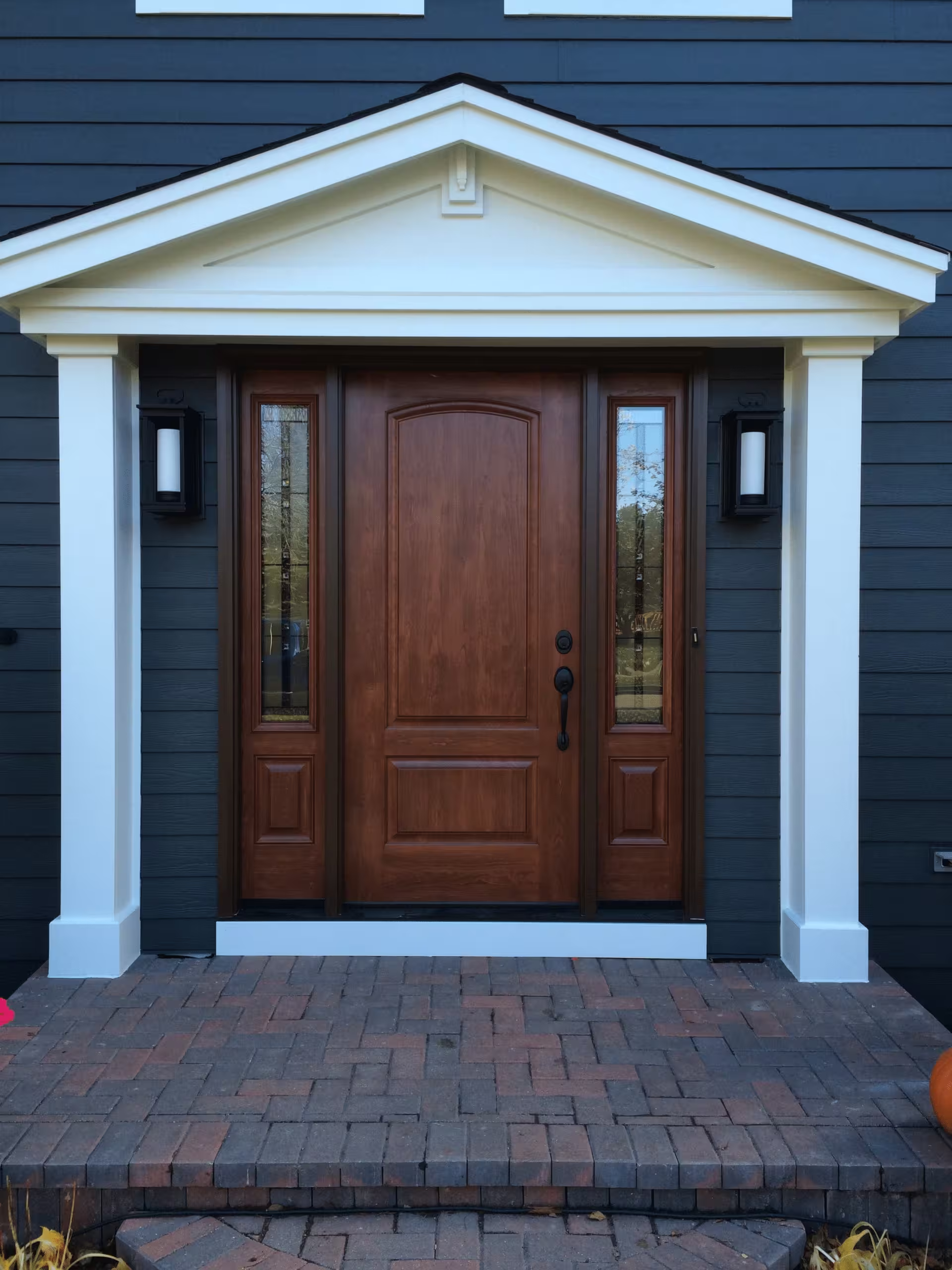
Fiberglass is the most balanced choice for Chicago weather. It won't dent, rust, or swell, and a stainable wood-grain skin can pass for real wood from the sidewalk. It’s a good fit for most homes, even those with entryways exposed to strong winds and blowing snow.
Steel Entry Doors
Steel is strong, secure, and well insulated. Its weak spot is the skin: a hard hit leaves a dent, and an unpainted scratch can rust where salt and slush collect at the threshold. It works best on a protected entry.
Wood Entry Doors
Nothing matches real wood on an older home with original trim, sidelights, or a transom, which is common in North Shore towns like Lake Forest, Highland Park, and Winnetka. Wood expands and contracts with changes in moisture, so it’s best suited to covered entryways and requires refinishing every few years to maintain its appearance and protect the surface.
Match the door to the house, too: a 1970s colonial in Vernon Hills and a 1920s home in Lake Forest need different proportions and hardware. We install entry doors from ProVia and Marvin; see the full range on our doors page.
Adding Glass, Sidelights, or a Transom
Glass brings daylight into the entry, and it changes the door’s performance. Choose insulated, low-E glass for every lite and sidelight. Near the lock, laminated or tempered glass keeps a broken pane from putting the deadbolt within reach. Textured or frosted privacy glass lets light in without a clear view inside. Adding sidelights or a transom where there weren’t any before changes the size of the opening, making it a new-opening project that is more likely to require a permit.
Energy Ratings: What to Look For on the Label
A front door is often the leakiest part of the wall, and its performance depends on two things: the door's rating and the install.
When comparing doors, look for:
- ENERGY STAR certification. Certified doors meet efficiency criteria set by the EPA, and those criteria get stricter as the door gets more glass.
- U-factor. It measures how much heat escapes through the door. Lower numbers insulate better.
- Glass package. Insulated glass with a low-E coating loses far less heat than single-pane decorative glass in lites and sidelights.
- Weatherstripping and sill. Compression seals and an adjustable sill close the gaps where most drafts start.
Even a top-rated door leaks if it's installed poorly. Proper sill flashing, low-expansion foam around the frame, and a well-adjusted threshold help keep the door sealed against harsh January winds.
Security Features Worth Paying For
Most forced entries target the frame, not the door panel. These features make the biggest difference:
- Reinforced strike plate fastened with long screws that reach the framing, not just the jamb.
- Grade 1 deadbolt. ANSI/BHMA Grade 1 is the highest residential rating for lock strength.
- Multipoint locking that secures the door at the top, middle, and bottom at once and pulls it tighter against the seals.
- Reinforced lock edge on fiberglass and steel doors to resist splitting.
- Smart lock prep if you plan to add a keypad or app-controlled lock later.
Easier Entry for Every Age
A front door should be accessible and easy to use for everyone, from visiting parents to your future self 20 years from now. A low-profile threshold, lever handles, a 36-inch door, and good lighting at the lock make the entry easier without making it look like an accessibility upgrade.
#cta_start
Not Sure Which Door Project You Have?
A look at the frame and sill usually answers it. We check the opening, explain what we find, and give you a clear plan before anything is ordered. Get in touch to work with us!
#cta_end
Is a New Front Door a Good Investment?
On paper, it's one of the strongest remodeling projects. In the national 2025 Cost vs. Value report, a steel entry door replacement recouped 216% of its cost at resale, second only to garage door replacement among all projects.
Resale is only part of the return. A well-sealed door stops the entryway draft and gives you a lock you trust, every day you live in the house, not only the day you sell. If you'd rather spread the investment out, HX Home Solutions offers financing for door projects.
Do You Need a Permit to Replace a Front Door?
It depends on two things: where your house is and how much of the opening changes.
Who issues the permit? If your home is inside an incorporated town, such as Highland Park, Lake Forest, Wheeling, Northbrook, or Naperville, your village or city building department sets the rules. If your address is in an unincorporated area, the county does. In unincorporated Lake County, that's the Planning, Building and Development Department, which states that alterations to an existing house require a building permit. In Cook and DuPage counties, unincorporated addresses go through the Cook County Department of Building and Zoning and the DuPage County Building and Zoning Department.
What the project involves. A same-size swap inside a sound frame is the least likely to need a permit. Widening the doorway, adding sidelights or a transom, or modifying the frame can make a permit much more likely. Homes in local historic districts may also need design review before making exterior changes.
There is no single rule for the whole Chicago area, and a front door isn’t automatically exempt. The simplest step is to check whether your address is incorporated, then call that office. Your contractor should also verify the permit requirements for your specific address before scheduling the work.
Front Door Installation Timeline
Most of the waiting happens before install day, not during it.
- In-home assessment. We measure the opening, check the frame and sill for damage, and talk through style, glass, and hardware.
- Ordering. Stock sizes arrive faster. Custom sizes, special glass, sidelights, and wood doors are made to order and take longer. When the order is placed, your lead time is confirmed.
- Install day. The old door comes out, any damage found behind the trim is repaired, and the new unit is set, leveled, flashed, insulated, and sealed. A same-size replacement is the quickest; a changed opening or masonry work takes longer.
- Finishing and walkthrough. Trim goes back on inside and out, the lock and threshold are adjusted, and we walk you through the new door before we leave.
Can a front door be replaced in winter? Yes. The opening is exposed only during the swap, and installers use sealants rated for cold temperatures. In severe weather, rescheduling is better than rushing the sealing process.
Get an Honest Read on Your Front Door
You don't have to choose a door yet. The first step is finding out what you're working with: a same-size swap, a frame repair, or a bigger change to the opening. The team at HX Home Solutions will look at your entry, check the frame and sill, and give you a straight answer. Schedule a free in-home estimate or explore our entry door options.