EuroShield vs. Asphalt Shingles: How to Choose a North Shore Roof
-
12min
-
Published:10/30/2026
-
ByShaunak Ahuja
Two bids on the same roof, and one is close to twice the other. The expensive one is EuroShield, a molded panel made largely from recycled tire rubber. The other is architectural asphalt shingles.
Here’s the part that reframes the comparison: both can carry UL 2218 Class 4, the top impact rating in the standard. That rating isn’t exclusive to rubber roofing, so the better questions are how long you plan to stay in the house, what your roof’s pitch is, and what your insurer will confirm in writing.
We install EuroShield roofing on the North Shore alongside CertainTeed asphalt systems, so we end up walking homeowners through this exact comparison. These are the things that decide it.
What this covers:
- How each roof is built, and what actually fails on each one.
- What Class 4 means, and the three checks that come before price.
- Verified local costs, and a break-even you can run on your own two bids.
How the Two Roofs Are Built
Each material has its own failure points, and those differences affect everything from maintenance to long-term performance.
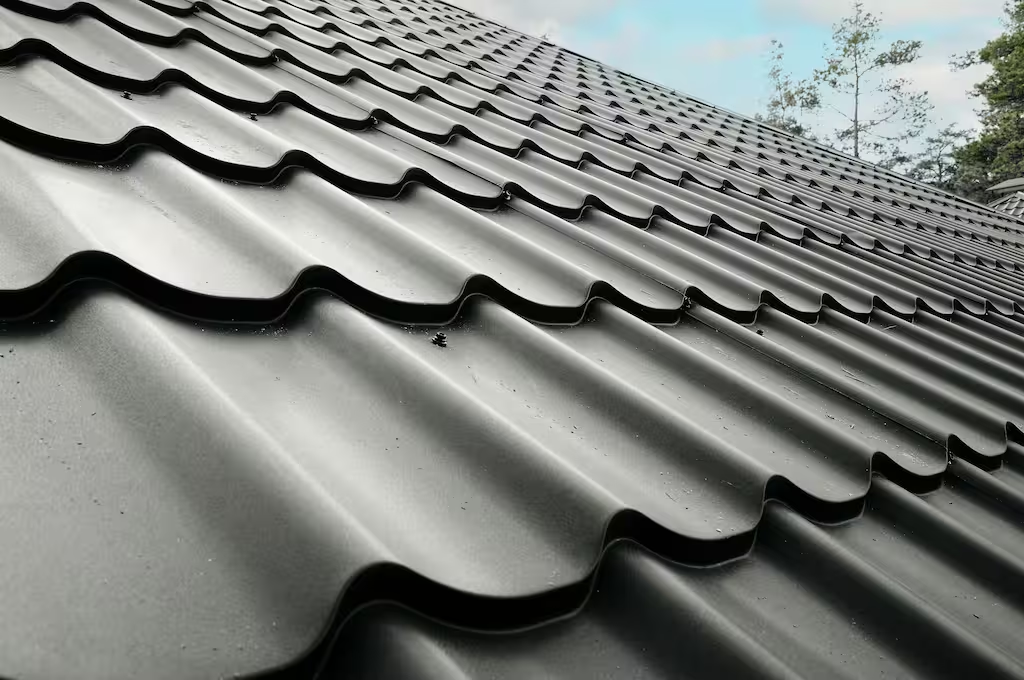
EuroShield is a molded composite panel. The manufacturer puts total recycled content at approximately 95 percent, with roughly 70 percent of the finished material being recycled tire rubber. The panels lock together mechanically and come in molded slate and cedar shake profiles, with no granular surface to wear away.
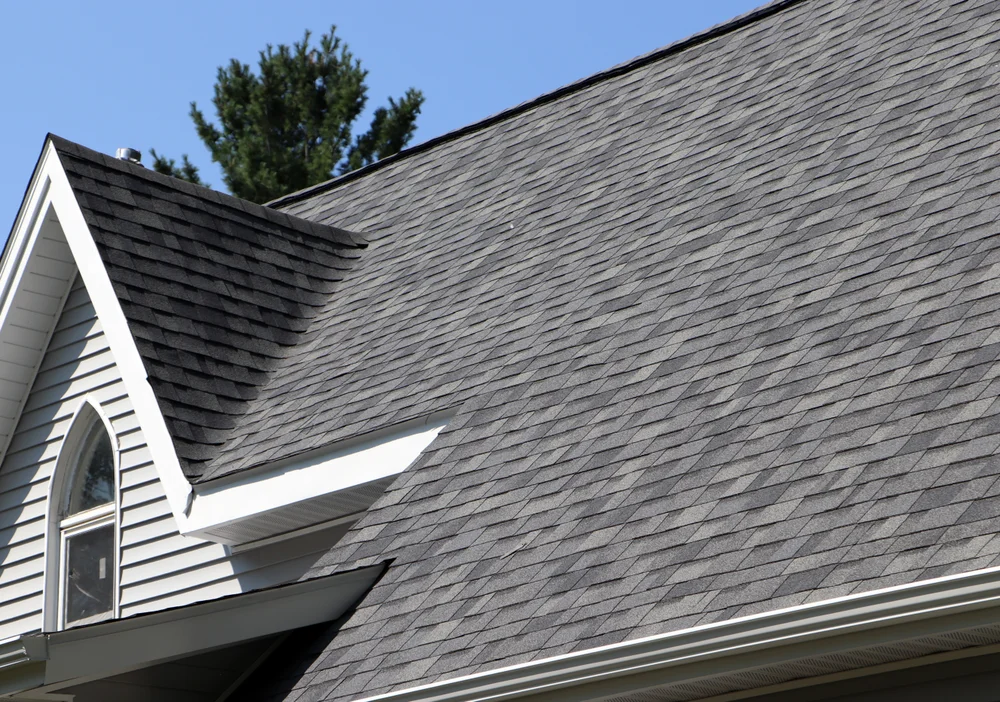
Architectural asphalt is a laminated assembly: a fiberglass reinforcing mat, an asphalt coating that does the waterproofing, mineral fillers, and ceramic-coated granules on the surface. Those granules aren’t decoration. They protect the asphalt beneath from ultraviolet light, making granule loss a functional concern rather than just a cosmetic issue.
Asphalt has a surface that impact and weather can strip away. EuroShield doesn’t have that surface to lose, which moves the performance questions onto the panel itself, the fasteners, and the flashings.
What Class 4 Actually Means
UL 2218 rates impact resistance in four classes, and each one is a steel ball dropped on the same spot twice without cracking the sample:
- Class 1: A 1.25-inch steel ball.
- Class 2: A 1.5-inch steel ball.
- Class 3: A 1.75-inch steel ball.
- Class 4: A 2-inch steel ball, dropped from roughly 20 feet.
A 2-inch steel ball isn’t a 2-inch hailstone. Steel and ice differ in density, stiffness, and shape, which is why the Insurance Institute for Business and Home Safety uses manufactured ice projectiles in its hail research and evaluates denting and granule loss rather than just cracking. Class 4 means best-in-test under a standardized protocol. It does not mean a roof cannot be damaged by hail.
The second thing worth knowing is that Class 4 is available in asphalt. If hail is driving your interest in rubber roofing, find out which product is included in the asphalt shingle estimate before comparing your options.
At the same rating, the difference is what happens after the impact. Asphalt can lose granules and sustain damage to the underlying mat, accelerating wear even when the roof still keeps water out. A 2025 IBHS study found that repeated sub-severe hail impacts from stones smaller than 1 inch can weaken a shingle roof’s ability to withstand larger hail later. EuroShield has no granule layer in that chain. Its warranty also states hail coverage in diameter, which is a different commitment than a test classification.
How Each Roof Handles North Shore Weather
Local weather data gives you a clearer picture than broad claims about “harsh Chicago winters,” so use the actual numbers to guide your decision.
Severe weather season here runs April through September, and NWS Chicago identifies June and July as the most active months.
On wind, one clarification beats any headline number. Marketing mixes three separate things: a laboratory test speed, a manufacturer wind warranty, and the design wind speed your village's code requires. The QAI code evaluation reports allowable uplift by fastening configuration instead, roughly 75 psf for Rundle Slate with the standard seven-nail pattern and up to about 173 psf with the higher-fastener pattern, and 180 psf for Beaumont Shake in the listed assembly. The report also excludes sheathing attachment to the framing, making it clear that a product’s wind rating doesn’t tell you how well the entire roof will perform in high winds.
On freeze and thaw, rubber is elastomeric and doesn’t oxidize as asphalt does, and polymer-modified Class 4 asphalt is engineered for cold-weather flexibility. Both improve on a conventional shingle. Neither includes a freeze-thaw cycle count in its certification, so any claimed advantage comes from the material’s properties rather than a measured performance rating.
On ice dams, neither covering prevents them. Meltwater from a warm roof plane refreezes at a cold eave, and the controls are attic air sealing, insulation, ventilation, and a self-adhered eave membrane. The QAI report requires an ice barrier where eave ice has occurred or is possible, so the certification itself treats this as an assembly problem.
Three Checks Before You Choose Either Roof
Check these factors before comparing prices. Two of the three favor asphalt, yet they’re often overlooked when homeowners compare roofing materials.
Fire classification. The current QAI code evaluation report approves the listed EuroShield products for use in Class C roof assemblies. The CertainTeed Class 4 asphalt lines are marketed with Class A fire performance in their qualifying assemblies, and Class A is the higher roof-covering classification. If your project specifications, local building codes, insurer, or HOA require Class A, that requirement takes priority over any other consideration.
Roof pitch. The same report covers slopes from 4:12 through 20:12. Below 4:12, the product falls outside the listing, and a different system is required. Pitch gets measured, not estimated from the driveway, and a house with both steep and low-slope planes may need two systems.
Weight. EuroShield profiles run roughly 240 to 360 pounds per roofing square by current manufacturer data, about 2.4 to 3.6 pounds per square foot of covering. Performance varies widely among standard laminated, premium, and luxury multi-layer asphalt shingles, so comparing them as a single category can be misleading. The number that matters is the selected profile against the selected shingle line.
The Three Questions Homeowners Ask First
Does a recycled tire roof smell in summer? A new installation can carry a rubber odor that fades as the panels weather. The limit on that answer: the supporting tests in the QAI certification cover fire, weathering, impact, and wind, not a product-specific emissions or odor test. If you’re sensitive to odors, ask for current product documentation instead of concluding the smell of tire crumb, asphalt paving, or EPDM membranes, which use different formulations and serve different purposes.
Does a dark rubber roof make the attic hotter? Attic temperature is driven by solar reflectance, thermal emittance, air sealing, insulation, and ventilation. The cited EuroShield certification doesn’t include a CRRC rating, SRI, or whole-roof R value. Reflective asphalt shingles are also available, so a roof’s ability to reflect direct sunlight depends on the specific product, not just the material category. Choose the color based on its tested properties and fix the attic on its own merits.
Is it quieter in rain and hail? Rubber's viscoelastic behavior makes sound dampening physically reasonable, and the manufacturer markets it. The certification doesn’t include an assembly-level acoustic rating, and what you hear indoors depends on the deck, the attic depth, the insulation, and the ceiling. Plausible, not quantified, and no decibel figure should be attached to it.
Curb Appeal and Architectural Review
Profile and Color Against Your Own Elevation
EuroShield's molded slate and shake profiles carry deeper relief than a laminated shingle's printed shadow lines. This works especially well on the steep gables of a Tudor or the textured exterior of a Craftsman home. Architectural asphalt is the more familiar option and offers a wider color range.
Whichever way you lean, view physical samples outdoors against your actual siding and trim. Color behaves differently on a north elevation in February than it does on a sample board.
HOA and Architectural Review
Get approval before the roofing package is ordered. Submit the exact profile and color, a physical sample, an installed photograph, the QAI documentation, the impact and fire classifications, the uplift documentation, the warranty, and an accurate material description as a recycled-rubber composite rather than as slate or cedar. Even when roofing materials look alike from the street, HOA covenants and project specifications may classify synthetic, rubber, composite, natural slate, and asphalt shingles differently.
Cost, Lifespan, and the Break-Even
A roofing square is 100 square feet of roof area. Roof geometry sets the square count, not the square footage on your listing, so a steep or cut-up roof carries more squares than its floor plan suggests.
What Moves the Number on Either Bid
- Roof geometry, pitch, and complexity
- Tear-off layers, and deck condition found once the old roof is off
- Product line and profile
- Flashing, ventilation, and eave membrane scope
- Site access and landscaping protection
- Permit requirements, which vary by village
Our roof replacement cost guide goes further into how these stack up across materials.
The Break-Even, and How to Run It
The key question is how short the asphalt roof’s expected lifespan would need to be for the higher upfront cost of rubber roofing to pay off compared with replacing asphalt shingles multiple times.
The table below answers it over a 50-year horizon at a 3 percent real discount rate, with insurance savings set to zero and one EuroShield installation assumed to span the period. The middle column is the highest rubber-to-asphalt price ratio that replacement avoidance alone can justify.
At the published figures above, EuroShield sits at about one and a half times the premium asphalt tier and close to twice the standard architectural tier. Compared with premium impact-resistant asphalt shingles, rubber roofing only pays off through avoided replacements if the asphalt roof lasts about 25 years or less. Against standard architectural shingles, roughly 20 years or shorter.
Which means warranty length is not the variable. Realized service life is. For context, State Farm, citing IBHS research, puts average roof life near 20 years, with replacement as often as every 7 to 10 years in areas that take a lot of hail. Your own claim and replacement history on this house beats any published average as an input.
To run it yourself:
- Divide the EuroShield bid by the Class 4 asphalt bid to get your price ratio.
- Estimate how long asphalt would realistically last on this roof, using its history rather than its warranty.
- Read the break-even ratio for that service life off the table.
- If your ratio is lower than the break-even ratio, replacement avoidance alone justifies the premium.
One correction on the sustainability comparison. EuroShield's recycled content is documented and substantial, but asphalt shingles can also be recycled: ground tear-off shingles go into hot-mix asphalt for paving, and state environmental agencies publish guidance on the process. Whether it happens on your project depends on local processing rather than on the material.
#cta_start
Which Ratio Are You Actually Working With?
Published lifespan ranges give you a starting point, but you’ll need actual bids based on your roof’s shape, pitch, and deck condition to calculate the break-even point. HX Home Solutions has been family-owned since 1950 and installs both EuroShield and CertainTeed systems. We measure on-site, check pitch, and put the scope in writing before anything is signed. Free estimates, no pressure.
#cta_end
Insurance Discounts in Illinois: Confirm Before You Sign
A Class 4 rating does not by itself secure a discount. Eligibility is written by material category as well as by impact rating, and at least one carrier operating in Illinois publishes Class 4 discount language that excludes synthetic polymer roof coverings. Rubber-composite panels sit close enough to that boundary that guessing is expensive.
Two more points that get glossed over. If the asphalt line on your competing bid is also Class 4, the incremental insurance benefit of switching materials may be nothing. You only avoid a deductible if a storm that would have triggered a covered claim on an asphalt roof doesn’t cause comparable damage to the new roof. That’s a matter of probability, not a guarantee in your insurance policy.
Here’s what to send your insurer before you sign:
- Manufacturer and exact profile name
- UL 2218 classification documentation
- Fire classification of the assembly
- The warranty document
Then ask for the premium effect in writing. Our guide to insurance coverage for roof replacement covers the claim side, and if you’re dealing with damage right now, storm damage roof repair is the place to start.
Which Roof Fits Which North Shore Home
Our asphalt roofing page covers the CertainTeed lines, and the roofing overview covers the rest of what goes on a North Shore roof.
Deciding on Your Own Roof
The ratings are settled, and the cost ranges are published. Ultimately, the decision comes down to your home’s roof pitch, your claim history, how long you plan to stay, and whether Class A is required.
That is work for a tape measure and a pitch gauge, not a product page. HX Home Solutions has handled North Shore, Cook County, and Lake County exteriors since 1950, and we install both systems compared here, so there’s no reason to push you toward the more expensive one. If you want the pitch measured, the square count verified, and both roofs priced on the same house, contact us and we will work through it with you.